
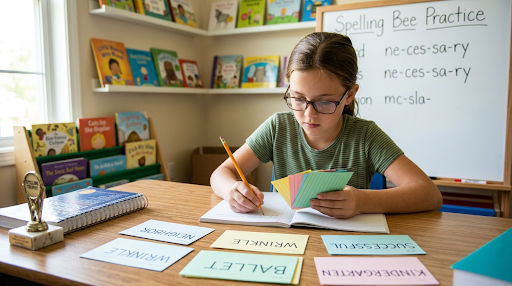
4th Grade Spelling Bee Words: The Ultimate Practice List
Fourth grade marks a real turning point in spelling bee difficulty. Kids at this level have moved well past simple three and four-letter words and are now expected to handle multi-syllable vocabulary, tricky vowel patterns, and words borrowed from other languages. If you’re a parent prepping your child for an upcoming classroom bee, or a teacher building a word list for practice rounds, this guide gives you everything you need: a full breakdown of what 4th grade spelling bee words actually look like, a categorized practice list, and strategies that make studying stick.Check today’s answers and hints anytime on our Spelling Bee answers hub.
What Makes 4th Grade Spelling Bee Words Different
By fourth grade, spelling bee word lists shift noticeably in both length and complexity compared to earlier grades. Understanding this shift helps you know exactly what to focus on during practice sessions.
Longer Words With More Syllables
Where 1st and 2nd grade lists lean on short, phonetic words, 4th grade lists regularly include three-syllable words and beyond. Words like “adventure,” “necessary,” and “fortunate” become common, requiring kids to break words into syllable chunks rather than sound them out letter by letter.
Trickier Vowel and Consonant Patterns
Fourth grade word lists start introducing spelling patterns that don’t follow simple phonetic rules, such as silent letters, double consonants, and vowel combinations like “ei” versus “ie.” These patterns trip up even strong readers because the words don’t always sound the way they’re spelled.
Introduction of Root Words and Prefixes
This is also the grade level where root word awareness starts becoming genuinely useful. Recognizing common prefixes like “un-,” “re-,” and “dis-,” along with suffixes like “-tion,” “-ful,” and “-less,” helps students break down unfamiliar words logically instead of guessing blindly.
Start practice with the common Spelling Bee words that appear in almost every round.
Full List of 4th Grade Spelling Bee Words
Below is a categorized practice list covering the most common word types that appear in 4th grade spelling bee rounds.
Everyday Vocabulary Words
These words show up frequently in daily reading and writing, making them a strong foundation for early practice rounds.
- adventure
- calendar
- neighbor
- favorite
- especially
- library
- vegetable
- mountain
- exercise
- probably
- remember
- surprise
- although
- beautiful
- together
Words With Silent Letters
Silent letters are one of the most common tripping points at this grade level, since the spelling doesn’t match the pronunciation.
- knowledge
- honest
- wrinkle
- listen
- autumn
- climbed
- gnome
- thumb
- island
- wrestle
Words With Double Consonants
Double consonants require careful attention, since students often either forget the second letter or add an extra one where it doesn’t belong.
- occasion
- possible
- necessary
- suddenly
- different
- happiness
- successful
- swimming
- beginning
- traveling
Words With Tricky Vowel Combinations
These words test a student’s understanding of vowel pairing rules, which don’t always follow the “i before e” guideline.
- receive
- believe
- neighbor
- weird
- foreign
- friend
- ceiling
- achieve
- eight
- height
Words Borrowed From Other Languages
Fourth grade lists often start including words with origins outside standard English spelling patterns, which requires memorization rather than phonetic reasoning.
- ballet
- bouquet
- karate
- volcano
- piano
- spaghetti
- kindergarten
- pajamas
- restaurant
- chorus
Compound and Multi-Syllable Words
These longer words test a student’s ability to break words into manageable parts rather than trying to memorize them as a single block.
- basketball
- grandmother
- understand
- everywhere
- afternoon
- thunderstorm
- watermelon
- yesterday
- newspaper
- homework
Shorter entries are easier for kids, so try our 5 letter Spelling Bee words list first.
ow to Practice 4th Grade Spelling Bee Words Effectively
Simply handing a child a list and asking them to memorize it rarely works well at this level. These strategies make practice sessions more effective and far less frustrating.
Break Words Into Syllables First
Before attempting to spell a full word, have the student say it out loud broken into syllables. For example, “necessary” becomes “ne-ces-sa-ry.” This habit mirrors exactly how experienced spellers approach unfamiliar words during a real competition.
Group Words by Pattern, Not Alphabetically
Rather than studying words in random or alphabetical order, group them by shared spelling patterns, such as silent letters, double consonants, or vowel combinations. This helps students recognize patterns they can apply to future unfamiliar words, not just the ones on their current list.
Use the Word in a Sentence
Asking a student to use each word in a sentence after spelling it correctly reinforces both meaning and spelling simultaneously. This is especially useful for words that sound similar to other words but have different spellings, such as “there,” “their,” and “they’re.”
Practice Writing, Not Just Speaking
Spelling bees are verbal, but writing the word out by hand after spelling it aloud helps reinforce the pattern visually and physically, which strengthens memory retention far more than verbal repetition alone.
Common Mistakes Students Make at This Level
Recognizing where fourth graders typically slip up can help you focus practice time where it matters most.
Rushing Through Syllables
Many students try to spell a long word all at once instead of pausing between syllables, which increases the chance of skipping or misplacing letters, especially in the middle of the word.
Confusing Homophones
Words that sound alike but are spelled differently, like “past” and “passed” or “led” and “lead,” are a frequent source of mistakes at this grade level, since spelling bees test spelling independent of context clues a student might normally rely on while reading.
Forgetting Silent Letters Entirely
Silent letters are the single most commonly dropped element in 4th grade spelling bee mistakes, since students often spell words exactly as they sound rather than as they’re actually written.
Move up a level with these 6 letter Spelling Bee words once your child is confident.
Tips for Parents and Teachers Preparing Students
A little structure goes a long way when preparing a fourth grader for a spelling bee.
Set Short, Consistent Practice Sessions
Ten to fifteen minutes of focused daily practice produces far better long-term retention than a single long cramming session the night before a competition.
Rotate Between Written and Verbal Quizzes
Alternating between having a student write words down and spelling them out loud mimics the actual format of a spelling bee while also reinforcing the word from multiple angles.
Celebrate Small Wins Along the Way
Fourth grade spelling words are noticeably harder than what students have handled in earlier grades, so acknowledging progress, not just perfect scores, keeps motivation high throughout the practice process.
Give the class some background with the history of the Spelling Bee before the competition.
Sample Practice Round for Classroom or Home Use
If you’re running a mock spelling bee round at home or in a classroom, here’s a sample rotation using the word categories above.
Round 1 – Everyday Vocabulary
Use words like “favorite,” “library,” and “beautiful” to warm up with familiar, frequently seen vocabulary before moving into harder categories.
Round 2 – Silent Letters and Double Consonants
Introduce trickier words like “knowledge,” “wrinkle,” “necessary,” and “successful” once students are comfortable and warmed up.
Round 3 – Vowel Combinations and Borrowed Words
Finish with the most challenging words, such as “neighbor,” “achieve,” “restaurant,” and “kindergarten,” since these require the most careful attention to spelling patterns rather than sound.
Parents can check any word instantly using our NYT Spelling Bee solver.
Frequently Asked Questions
How Many Words Should a 4th Grader Practice Before a Spelling Bee?
There’s no strict number, but practicing 40 to 60 words across multiple categories, with regular review, gives most fourth graders a solid, well-rounded foundation heading into a competition.
What's the Hardest Type of Word for 4th Graders?
Words with silent letters and unusual vowel combinations tend to be the most challenging, since they don’t follow predictable phonetic rules that younger spellers typically rely on.
Should 4th Graders Learn Word Origins?
Basic awareness of common prefixes and suffixes is helpful at this level, but full etymology study is usually more appropriate for older grade levels with more advanced spelling bee competitions.
How Long Should Practice Sessions Be for a 4th Grader?
Short, consistent sessions of ten to fifteen minutes tend to be far more effective than long, infrequent study sessions, since they help build retention without causing fatigue or frustration.
Looking ahead to more advanced competitions? Check out our complete study guide for 3rd Grade Spelling Bee words.
Final Thoughts
Fourth grade spelling bee preparation is really about building pattern recognition, not just memorizing a fixed list of words. By practicing in categories, breaking words into syllables, and reinforcing both the sound and the written form of each word, students build a foundation that carries well beyond a single competition. With consistent, short practice sessions and a well-rounded word list like the one above, most fourth graders can walk into their spelling bee feeling genuinely prepared rather than simply hoping they memorized the right words.